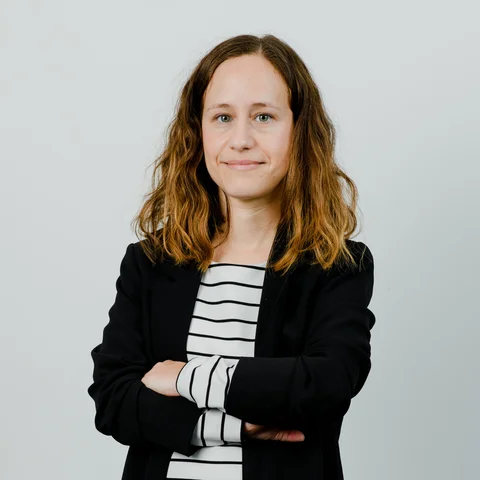


Womtech: MARÍA MARTÍNEZ
PROCUREMENT SENIOR APPLICATION EXPERT
Meet María Martínez Prados, Procurement Senior Application Expert at Holcim EMEA Digital Center. With a background in Business Administration and extensive experience in business operations and digital transformation, María specializes in connecting business needs with technology solutions. Her work focuses on optimizing processes, improving collaboration, and leveraging digital tools to create more efficient and sustainable ways of working across the organization.
What was a key moment that changed your career path in tech—and why?
I studied Business Administration in my hometown, Almería, and from the beginning I was always more interested in improving business operations and processes than in the purely financial side of business.
I started my career managing the accounting department of a construction materials company, where I gained firsthand experience of how complex business processes can be and how much impact efficiency has on daily operations. The turning point came when I had the opportunity to work with SAP. Discovering ERP systems opened a new world for me. I realized technology could connect every area of a company (procurement, manufacturing, sales…) and, most importantly, could transform the way people work.
What attracted me most was the possibility of improving business processes through technology, combining analytical thinking with real operational impact. That is what led me into the tech world, and it still motivates me today.
Your role today—and why does it matter?
What I really do is help bridge the gap between business needs and technology solutions. My role is about understanding how people work, identifying inefficiencies or pain points, and translating them into processes and systems.
What makes this meaningful to me is that technology is not only about systems—it is about enabling people to work better together and helping companies become more agile and responsible in the way they operate.
Which tech trend excites you the most, and what risks do we need to address?
What excites me the most is the evolution of automation, especially how it can support better decision-making and free people from repetitive tasks so they can focus on more strategic and creative work.
At the same time, I think we need to be careful about the risks. We must ensure that these technologies are created in an ethical, safe manner that does not discriminate or unfairly harm certain groups of people.
What is still holding women back in tech leadership—and what actually helps move the needle?
I think one of the biggest challenges is that women are still underrepresented in leadership and highly visible technical roles. What really helps move the needle is creating environments where diverse voices are actively encouraged and where leadership is based on talent and collaboration.
Representation also matters. When young women see other women leading projects, making technical decisions, and succeeding in technology careers, it becomes easier for them to imagine themselves in those positions too.
What responsibility do tech leaders have today towards people, society, and sustainability?
In industries connected to construction and manufacturing, technology can play a major role in improving efficiency, reducing environmental impact, and supporting more sustainable ways of working.
A good example is the solution developed in Holcim for construction and demolition material (CDM) processes, supporting operations to improve resource usage in the industry. I believe leaders should always ask, 'What impact will it have on people and the future?' when making decisions.
What is one truth about working in tech that we don't talk about enough?
One truth about working in tech that we do not talk about enough is that you do not need to come from a purely technical background to succeed in technology. Curiosity, problem-solving, communication, and understanding business needs are equally important. Technology is ultimately about people and collaboration.
My own journey started from business operations, not engineering, and that perspective has actually become one of my strengths. Diverse backgrounds bring different ways of thinking, and that diversity is exactly what helps innovation happen.